
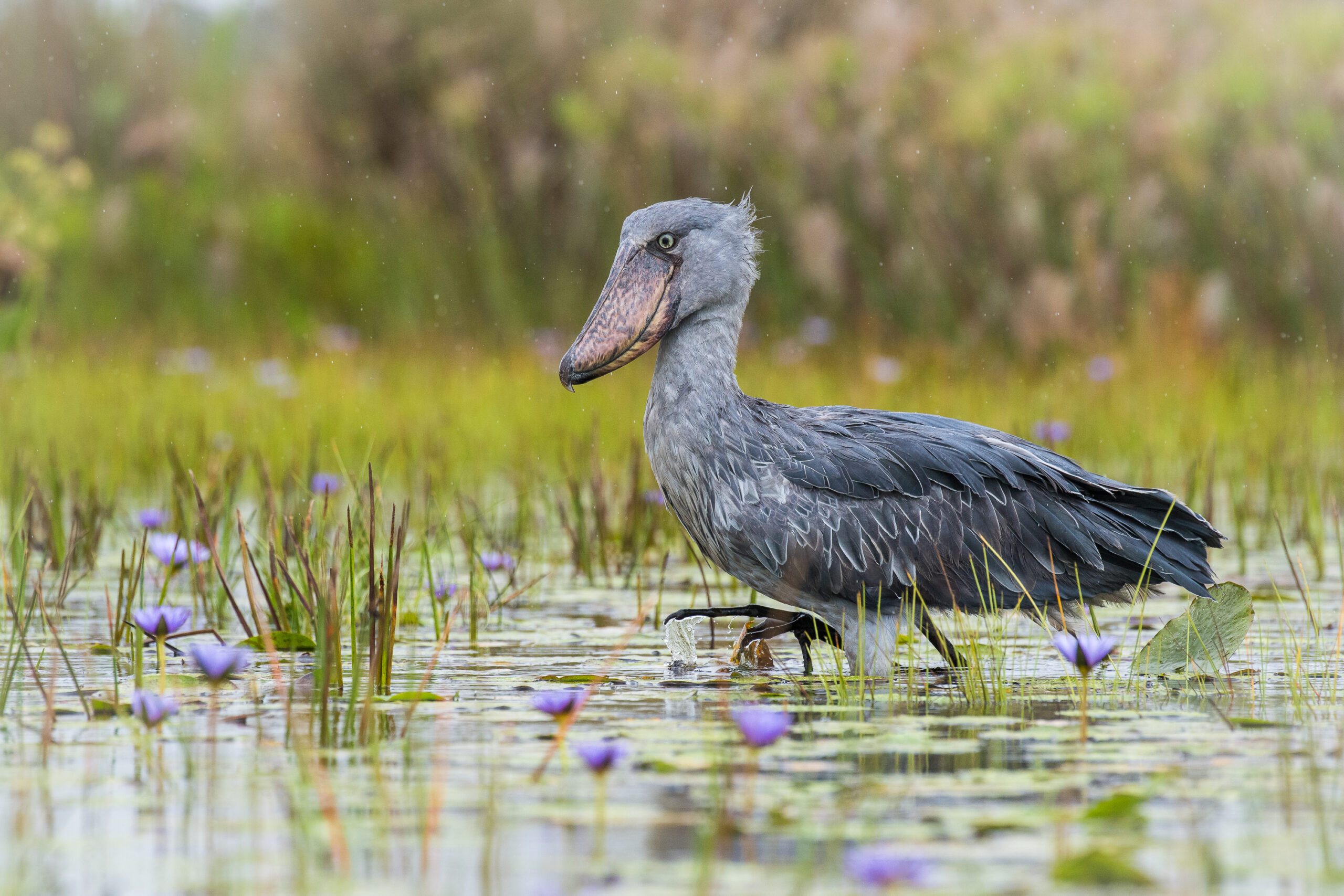
Mabamba Swamp Shoebill Watching: A Birdwatching Experience in Uganda
Mabamba Swamp shoebill watching offers one of Uganda’s most exciting birdwatching experiences. Located along the northern shores of Lake Victoria, near Entebbe, Mabamba Swamp attracts bird lovers who want to spot the rare and fascinating shoebill. Lake Victoria, traditionally known as Lake Nalubale, ranks as the largest lake in Africa by surface area and stretches across Uganda, Kenya, and Tanzania.
The wetland forms an important birding area in Uganda and provides a valuable habitat for the critically endangered shoe bill. Its shallow waters, papyrus vegetation, and abundance of lungfish create ideal conditions for this remarkable bird. Local communities also play an important role in conserving the wetland and protecting its wildlife. A visit to Mabamba Swamp allows travelers to appreciate the natural beauty that makes Uganda famous as the Pearl of Africa.
The Origin and Importance of Mabamba Swamp
The name Mabamba reportedly comes from the local Luganda word associated with lungfish, which fishermen have traditionally caught in the swamp. These fish remain an important food source for the shoe bill and contribute to the wetland’s ecological significance.
Mabamba Swamp gained international recognition as a Ramsar wetland site in 2006, highlighting its importance for wetland conservation and bird life. The swamp supports a rich variety of habitats, including papyrus beds and shallow channels, which provide feeding and breeding grounds for numerous bird species.
Visitors can explore the wetland by traditional motorized canoe or boat, navigating narrow channels through the papyrus as experienced local guides help them search for the elusive shoe bill. Early-morning trips often provide rewarding birdwatching opportunities, although sightings depend on the bird’s movements and feeding activity.
Bird Species to See at Mabamba Swamp
Mabamba Swamp supports more than 300 bird species, making it one of Uganda’s outstanding birdwatching destinations. Although the shoe bill remains the main attraction, birdwatchers can also look for a variety of waterbirds, forest-edge species, and papyrus specialists.
Other birds that visitors may encounter include:Papyrus Gonolek, Papyrus Yellow Warbler, Blue Swallow, Red-faced Barbet, Woodland Kingfisher, Winding Cisticola, White-throated Bee-eater, Pink-backed Pelican, African Pygmy Goose, Purple Heron, Ross’s Turaco, African Pied Wagtail, Hamerkop, Great White Pelican, Grey Parrot, Squacco Heron.
The exact species visitors see will depend on the season, weather, and location within the wetland. A knowledgeable local guide can help identify birds by their calls, colors, feeding habits, and distinctive flight patterns.
The Shoebill: Mabamba Swamp’s Main Attraction
The shoebill draws birdwatchers from around the world to Mabamba Swamp. This large, prehistoric-looking bird gets its name from its enormous, shoe-shaped bill, which helps it catch prey in shallow water. Although some visitors initially find its appearance unusual, many soon admire its distinctive features, impressive size, and calm, statuesque posture.
The shoebill often stands motionless for long periods as it waits for fish, especially lungfish, to approach. When the opportunity arises, it strikes quickly and uses its powerful bill to capture its prey. Its patient hunting style makes watching the bird a memorable experience.
Because the shoebill faces serious conservation challenges, responsible tourism matters. Chimptrails africa urges visitors to follow their guides’ instructions, maintain a respectful distance, avoid disturbing the birds, and support local operators who contribute to wetland conservation.
Why Visit Mabamba Swamp?
Mabamba Swamp combines exceptional birdwatching with a peaceful journey through one of Uganda’s most important wetlands. Whether you are a dedicated birder, a wildlife photographer, or a traveler exploring Entebbe, a guided boat trip offers an opportunity to observe the shoebill and discover the wetland’s rich biodiversity.
The experience also highlights the connection between local livelihoods, sustainable tourism, and conservation. By visiting responsibly, travelers can support the communities that help protect Mabamba Swamp and its remarkable wildlife.