Gorilla Trekking in Uganda: Everything You Need to Know Before You Go
Indeed there is much you will need to know about Gorilla trekking in Uganda, this guide is unfolding the actual information you need to know about gorilla trekking in Uganda.
You hear the gorilla, before you see it. A branch snaps somewhere uphill. Leaves rustle in the undergrowth. The trackers exchange a quick glance and point towards a narrow path disappearing into thick vegetation.
“They’re close.” The ranger’s alert on the trail, the hike suddenly feels easier, due to anticipation.
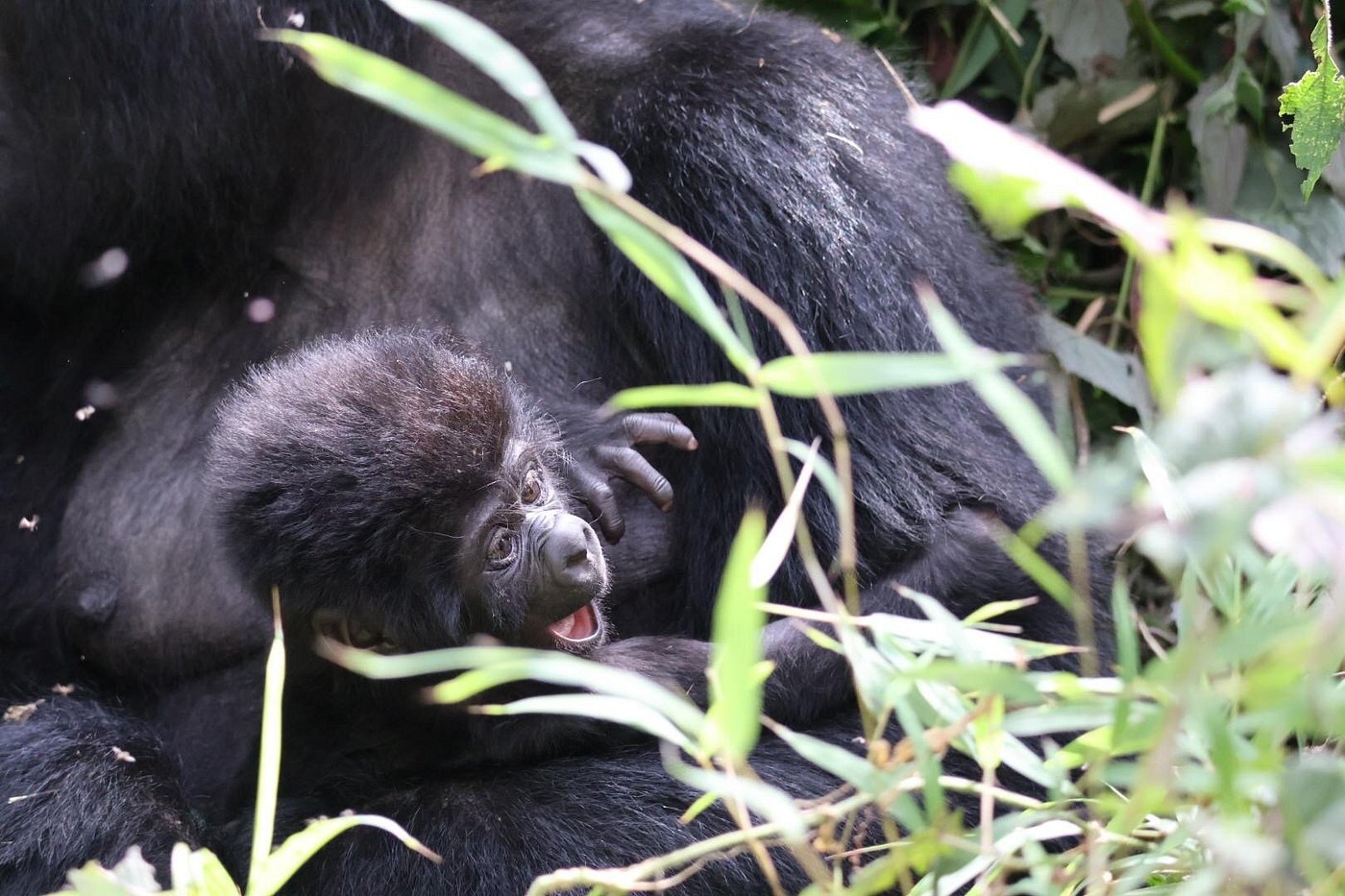
Ten minutes later, the forest opens into a small clearing. A Juvenile gorilla climbs down from a tree branch, seemingly more interested in playing than the visitors standing quietly a few meters away. Behind it, a silverback sits against the trunk of a tree, stripping wild celery with slow, deliberate movements.
For the next hour, nobody is thinking about permit prices, hiking boots or how many kilometers they walked to get here. They are simply present. That is why people travel halfway across the world to trek mountain gorillas. Not because it’s a wildlife sighting, but because it is an encounter.
Few experiences in Africa leave such a lasting impression, yet gorilla trekking is often misunderstood. Many travelers assume it’s an extreme expedition requiring weeks of preparation. Others expect a leisurely walk ending with a guaranteed photograph. The reality sits somewhere between those extremes.
You will hike through one of Africa’s oldest rainforests, sometimes for less than an hour, sometimes for much longer. Rangers carry radios and first-aid equipment. Trackers leave before dawn to locate the gorilla families, communicating their position to the guides who lead visitors into the forest.
Nothing is left to chance. The experience feels wild because so much careful planning happens behind the scenes.
Why Uganda Is One of the Best Places in the World to See Mountain Gorillas
Only three countries offer mountain gorilla trekking in the wild; Uganda, Rwanda and the Democratic Republic of Congo.
Uganda protects almost half of the world’s remaining mountain gorillas, making it one of the most important destinations for their long-term survival.
The country’s gorillas live in two protected areas in southwestern Uganda.
Bwindi Impenetrable National Park is the best known. Covering more than 320 square kilometres, this ancient rainforest is recognised as a UNESCO World Heritage Site and supports the largest population of habituated mountain gorilla families in Uganda.
A few hours away lies Mgahinga Gorilla National Park, Uganda’s smallest national park. Although it has only one habituated gorilla family available for tourism at any given time, it forms part of the larger Virunga Conservation Area, a trans boundary ecosystem shared with Rwanda and the Democratic Republic of Congo.
The setting feels different in Mgahinga National Park. Three volcanic peaks dominate the skyline. Bamboo forests replace parts of Bwindi’s dense jungle. Golden monkeys share the same habitat, and hikers often combine gorilla trekking with volcano climbs or cultural visits led by members of the Batwa community.
Choosing between Bwindi and Mgahinga is not about deciding which park has “better” gorillas. The gorillas are equally remarkable. The difference lies in the landscape, accessibility and your journey style
Bwindi’s Four Trekking Sectors: Choosing the Right Base
Many first-time visitors don’t realise that Bwindi is divided into four separate trekking sectors. This matters because your accommodation should match the sector where your gorilla permit has been allocated.
Driving between sectors on trekking morning is practical for some but not all. Roads wind through steep hills, tea gardens and farming villages, and what appears close on a map can take several hours by road.
The four sectors each have their own character.
Buhoma
Located in the northern part of the park, Buhoma is where gorilla tourism in Uganda began and the headquarters
The area has a well-developed selection of lodges, from comfortable mid-range options to some of the country’s finest luxury forest retreats. Several walking trails begin here, including the scenic route to Munyanga Waterfall, making it a good choice for travelers who want to spend more than a single night near the forest. It is also good for travelers connecting from or to other national parks by road and air
Rushaga
Further south, Rushaga has the highest number of habituated gorilla families in Uganda.
That greater permit availability makes it one of the easiest sectors to book during busy travel periods. The surrounding hills are steep but beautiful, with panoramic views stretching towards the Virunga volcanoes on clear mornings.
Rushaga is also the only sector where visitors may, subject to availability, take part in the Gorilla Habituation Experience, spending up to four hours with researchers and trackers instead of the standard one-hour visit.
Nkuringo
If scenery and emotionally provoking views are high on your list, Nkuringo is difficult to beat.
Perched high on Nteko ridge overlooking the Albertine Rift Valley, this sector offers spectacular views, particularly at sunrise when low cloud settles between the hills.
Treks here can be more physically demanding because of the steep terrain, but the rewards often extend beyond the gorilla encounter itself. The community visits, the batwa cultural encounters and community tourism experiences from Gorilla junction foundation.
Accommodation in Nkuringo presents the premium stays near bwindi. The journey through the landscape becomes part of the experience.
Ruhija
Quieter than the other sectors, Ruhija appeals to birdwatchers and travelers looking for a more peaceful atmosphere.
The surrounding montane forest supports numerous Albertine Rift endemic bird species, making it an excellent base for combining gorilla trekking with guided forest walks.
Like every sector in Bwindi, the quality of the gorilla encounter depends less on location than on the movements of the family you’re tracking that particular day.
No two treks are ever identical; reason for the double booking of gorillas from two different sectors, like a new trend for gorilla trekking in Uganda.
The Gorilla Permit: What You’re Really Paying For
One of the first questions travelers ask is simple.
Why does a gorilla permit cost so much?
For international visitors, a Uganda gorilla trekking permit currently costs US$800 through the Uganda Wildlife Authority. At first glance, it seems expensive. Until you understand what that fee supports.
Mountain gorillas remain endangered. Protecting them requires constant investment. Rangers patrol the forest every day to deter poaching and illegal activities. Veterinary teams monitor gorilla health and respond when animals are injured or become ill. Trackers locate habituated families before visitors enter the forest, while researchers collect data that helps shape conservation decisions.
Tourism helps fund much of this work.
A share of park revenue is also channeled into neighboring communities through revenue-sharing programs that support schools, health centers, water projects and other local initiatives. The goal is practical as much as ethical: when communities benefit from conservation, there is greater incentive to protect forests rather than convert them to farmland.
The permit also limits visitor numbers.
Each habituated gorilla family receives only one carefully managed tourist group per day, with a maximum of eight visitors. Once your one hour viewing time is over, the group leaves the forest and the gorillas are left undisturbed. That controlled approach has become one of conservation’s greatest success stories.
Over the past few decades, mountain gorilla numbers have gradually increased—an achievement that remains rare among the world’s great apes.
When people ask whether gorilla tourism makes a difference, the answer is visible in the forest itself. Without long-term conservation funding, there would be no gorilla trekking. More importantly, there would be far fewer gorillas.
What Gorilla Trekking Day Actually Looks Like
Most trekking days begin before sunrise.
In Buhoma, you might wake to the sound of black-and-white colobus monkeys moving through the trees above your lodge. In Rushaga or Nkuringo, the morning often arrives wrapped in mist, with terraced hills slowly emerging as the light improves.
Breakfast is usually early.
By 7:00 a.m., vehicles begin arriving at the Uganda Wildlife Authority briefing point. Guides greet one another by name. Porters wait nearby, chatting quietly as visitors check their passports and permits.
There’s excitement. A little nervousness too. For many people, this is the reason they came to Uganda.
The Morning Briefing
Before anyone enters the forest, every group attends a briefing led by a Uganda Wildlife Authority ranger. The talk is practical rather than theatrical.
You will learn how to behave around gorillas, why maintaining a minimum distance of around seven meters matters, and what to do if a gorilla walks closer than expected.
Young gorillas, especially juveniles, are naturally curious. If one approaches, the advice is simple, Stand still, Stay calm let the gorilla decide what happens next.
You will also be reminded not to eat, drink or smoke near the gorillas, and if you’re feeling unwell with a cold or flu-like symptoms, you’re expected to report it before the trek begins.
That rule protects the gorillas and the visitors.
Mountain gorillas share approximately 98% of their DNA with humans, making them highly susceptible to many of the illnesses we consider routine. A common cold can spread through a gorilla family with serious consequences.
Conservation begins with small decisions.
Meeting Your Ranger and Trackers
Once the briefing ends, groups are assigned to different gorilla families. Each group is accompanied by an armed ranger. The firearm isn’t there for gorillas. It’s a precaution for other wildlife, particularly forest elephants or buffalo, although encounters are uncommon.
The ranger is your guide, interpreter and storyteller throughout the day. Many have spent decades working in Bwindi. They recognise bird calls, identify medicinal plants used by local communities and explain the behavior of animals that most visitors would simply walk past.
Ahead of every trekking group are the trackers. They entered the forest hours earlier. Using fresh dung, feeding sites, broken branches and overnight nests, they locate the gorilla family before guiding your group towards its position using radio communication.
It’s remarkable field craft. Nothing about it feels staged.
Should You Hire a Porter?
If there’s one piece of advice experienced travelers often pass on, it’s this: Hire a porter. Not because you’re unable to carry a backpack. Because it benefits everyone involved.
Most porters come from communities bordering Bwindi or Mgahinga. Some are former poachers. Others once depended on forest resources for their livelihoods before tourism created alternative employment.
The fee, paid directly to the porter, provides meaningful income while reducing pressure on the protected forest. Practically speaking, they’re invaluable.
A porter carries your daypack, offers a steady hand across muddy slopes and somehow makes the steepest sections of the trail feel a little less intimidating.
Many visitors arrive determined to manage on their own. None regret accepting the help.
Into the Forest
No guide can tell you exactly how long your trek will take. That depends entirely on where the gorillas have moved overnight. Some families remain surprisingly close to the park boundary. Others travel deeper into the forest in search of fresh vegetation. One group might reach the gorillas in forty-five minutes.
Another could spend four hours hiking before the trackers raise a hand and whisper, “They’re here.” That’s part of the experience. Bwindi is called Impenetrable for a reason. The terrain rises and falls constantly.
There are narrow footpaths, tangled vines, giant tree ferns and thick stands of bamboo. In some places, rangers use machetes to clear sections of vegetation that have quickly reclaimed the trail.
The forest is never silent.
You’ll hear the rhythmic calls of great blue turacos, the distant drumming of woodpeckers and the rustle of leaves as L’Hoest’s monkeys disappear through the canopy. Then everything changes. The ranger turns around. “Leave your walking sticks here.” The gorillas are close.
The Hour Everyone Remembers
The first sighting is rarely dramatic. You don’t round a corner and suddenly find yourself face-to-face with a silverback. Instead, shapes gradually emerge from the vegetation. A hand gripping a vine. A broad black shoulder disappearing behind leaves. The slow chewing sound of stems being stripped and eaten. Then the forest reveals the family.
The silverback usually catches your attention first. He sits with extraordinary calm, occasionally glancing towards the visitors before returning to his meal. Around him, the rest of the family carries on with daily life. Youngsters wrestle with one another. Mothers groom their infants. Teenage gorillas climb trees they have absolutely no business climbing.
Nothing has been arranged for your benefit. You’re simply watching a family go about its morning. For sixty minutes, cameras click quietly.
People smile. Some lower their cameras altogether. Many say later that the photographs mattered less than they expected. Looking or call it “optical nutrition” became enough.
The Rules That Protect the Experience
The one-hour limit often surprises visitors. Why not longer? Because these aren’t zoo animals. They are wild mountain gorillas whose welfare always comes first. Limiting human contact reduces stress and lowers the risk of disease transmission.
Visitors are also asked to speak softly, avoid sudden movements and never use flash photography. If a gorilla moves towards you, the ranger will quietly guide the group’s response. There is no need to step backwards quickly or panic. Curiosity is normal, particularly among younger gorillas. The key is remaining calm and allowing the animals to dictate the interaction.
That respect works both ways. The gorillas tolerate visitors because the encounters are carefully managed, consistent and brief.
The Walk Back Feels Different
After an hour, the ranger gives a quiet signal. Time to leave. Most people glance back one last time before following the trail downhill. The return walk is usually lighter. Conversations begin again. People compare photographs. Someone laughs about the muddy section they almost slipped on. Someone else admits they didn’t expect to become emotional.
Back at the briefing center, you’ll receive your trekking certificate. It isn’t a trophy. It’s simply a reminder that you took part in one of the world’s most successful wildlife conservation programs.
The day doesn’t end there.
Many lodges arrange visits to nearby coffee farms, community craft groups or Batwa cultural experiences during the afternoon. Others encourage guests to spend the evening overlooking the forest with a cup of Ugandan coffee, replaying the morning in their minds.
Because long after the mud has been washed from your boots and the photographs have been shared with family back home, one image tends to stay with you. A silverback sitting quietly beneath the forest canopy. Looking back.
How Fit Do You Need to Be?
One of the biggest myths surrounding gorilla trekking is that you need to be an experienced mountaineer. You don’t. What you do need is a reasonable level of mobility and the willingness to walk on uneven ground.
Some treks last less than an hour before reaching the gorillas. Others take two or four hours, particularly if a family has moved deeper into the forest overnight. Rangers don’t know exactly where the gorillas will be until the trackers locate them that morning. That’s why no guide can honestly promise an “easy trek.”
Bwindi sits between 1,160 and 2,607 metres above sea level, and the landscape reflects that elevation. Hills rise sharply from narrow valleys, and many of the trails follow old community footpaths through farmland before entering the rainforest.
One section might be a gentle walk beneath towering trees. The next could involve climbing a muddy slope using exposed roots for balance. Take your time. Nobody is rewarded for reaching the gorillas first and no one is left behind for being slow
Rangers walk at the pace of the group, stopping regularly for water breaks and to explain the plants, birds and signs of wildlife along the trail.
If you have concerns about your fitness, discuss them with your tour operator before travelling. Uganda Wildlife Authority will often do its best to allocate visitors with mobility concerns to gorilla families that are expected to be closer, although this can never be guaranteed.
Being honest about your fitness and any health challenges helps everyone. So does accepting help.
What Should You Pack for Gorilla Trekking?
The forest has its own dress code. It isn’t about looking like an explorer. It’s about staying comfortable.
Essentials include:
• Waterproof hiking boots with good ankle support.
• Long walking trousers to protect against stinging nettles and insects.
• A lightweight long-sleeved shirt.
• A waterproof rain jacket.
• Gardening or trekking gloves for gripping branches and vines.
• Thick hiking socks.
• A small daypack.
• At least two liters of drinking water.
• Energy snacks for after the trek.
• Sunscreen and a hat for the open sections before entering the forest.
• Insect repellent.
• A face musk to use during your viewing time
Many first-time visitors also pack gaiters. They’re not essential, but they help keep mud out of your boots during wetter months, especially in Bwindi’s southern sectors.
Leave unnecessary equipment behind. The less you’re carrying, the more you’ll enjoy the walk.
Can You Take Photographs?
Yes. Photography is encouraged. For many visitors, this will be the closest they have ever been to wild great apes, and naturally they want to remember the experience.
A few simple guidelines make a big difference.
• Turn your camera’s flash off before entering the forest.
• Keep movements slow and deliberate when changing position.
• Avoid stepping in front of another visitor’s view or crowding around a particular gorilla.
• Patience usually rewards photographers.
• Instead of chasing images, wait. The gorillas often move naturally into better light or more open spaces. Many professional wildlife photographers return with surprisingly simple advice.
• Take fewer photographs than you think.
• Spend more time watching.
• The memory often lasts longer than the image.
The Conservation Story Most Visitors Never Hear
When people talk about Bwindi gorilla trekking, they naturally focus on the hour spent with the gorillas. The conservation story begins long before that.
Every morning, trackers enter the forest before visitors arrive. They monitor the health and movements of each habituated family, noting injuries, unusual behavior and the presence of newborn infants.
Veterinary specialists from organisations such as Gorilla Doctors respond when gorillas are injured by snares or show signs of illness. Researchers continue long-term studies on behavior, genetics and habitat use, helping conservation managers make informed decisions about protecting the population.
Communities living around Bwindi also play a vital role. Before the park was established in 1991, many families relied directly on the forest for firewood, hunting and medicinal plants. Protecting mountain gorillas meant changing that relationship. Today, tourism supports employment in dozens of different ways; Trackers, Rangers, Porters, Housekeepers, Drivers, Craft cooperatives, Coffee farmers and Community guides.
Revenue from gorilla trekking permits Uganda also contributes to local development through Uganda Wildlife Authority’s revenue-sharing program, helping fund schools, health centers, water projects and other community initiatives.
Gorilla trekking Uganda works best when local people see tangible benefits. Uganda’s mountain gorilla recovery demonstrates exactly that. It’s one of the few conservation stories where wildlife populations have increased because tourism was managed carefully rather than expanded without limits.
Common Mistakes First-Time Gorilla Trekkers Make
Most are easy to avoid.
Waiting too long to book permits.
The most popular trekking dates, particularly between June and September and during the Christmas holidays, can sell out months in advance.
Underestimating the hike.
Visitors often focus on the one hour with the gorillas and forget that reaching them is part of the experience. Good footwear matters.
Skipping the porter.
Many travelers decline at first, then wish they hadn’t. A porter doesn’t just carry your backpack. They make the walk easier while supporting families living beside the park.
Packing too much.
You don’t need three camera lenses, heavy jackets or unnecessary gadgets. Travel light.
Thinking only about gorillas.
Southwestern Uganda has far more to offer than a single trek.
Many of the best itineraries include time at Lake Bunyonyi, where dugout canoes glide across one of Africa’s deepest lakes, or Mgahinga Gorilla National Park, where golden monkey tracking and volcano hikes complement the gorilla experience beautifully.
Others continue north to Queen Elizabeth National Park, allowing visitors to swap rainforest for open savannah in just a few hours.
The variety is part of what makes Uganda special.
Making Gorilla Trekking Part of a Bigger Journey
Very few travelers fly to Uganda, trek gorillas and leave the next day. Nor should they. The country’s geography makes it surprisingly easy to combine different ecosystems within one itinerary.
A classic ten-day safari might begin in Kibale National Park, where habituated chimpanzees move through one of Africa’s richest tropical forests.
From there, the road leads south through the crater lakes around Fort Portal into Queen Elizabeth National Park. Morning game drives, boat cruises along the Kazinga Channel and the chance of seeing tree-climbing lions in Ishasha create a completely different wildlife experience before the journey continues into Bwindi.
After gorilla trekking, many travelers spend a night beside Lake Bunyonyi. The pace changes immediately. Children paddle wooden canoes between the islands. Fishermen check their nets at dawn. The cool highland air feels worlds away from the heat of the savannah.
Some itineraries continue into Mgahinga Gorilla National Park for golden monkey tracking or volcano hiking. Others loop north towards Murchison Falls or return to Entebbe via the Equator crossing at Kayabwe, where roadside craft shops and local cafés offer one final stop before the journey ends.
Seen this way, gorilla trekking becomes more than a single activity. It becomes the centerpiece of a broader exploration of Uganda’s landscapes, wildlife and communities. And that’s often what surprises people most. They arrive expecting to remember the gorillas. They leave remembering the country and its friendliest people
Frequently Asked Questions About Gorilla Trekking in Uganda
By the time most travelers have chosen Uganda for their safari, they have usually read dozens of articles about gorilla trekking.
The same questions keep appearing. Some are practical. Others come from understandable uncertainty about what to expect in a rainforest where the wildlife—not the visitors—sets the schedule.
Here are the answers we give our own guests before they travel.
How much does a gorilla trekking permit cost in Uganda?
As of 2026, a standard gorilla trekking permit issued by the Uganda Wildlife Authority (UWA) costs US$800 per international non-resident.
The permit includes:
• Park entry for the trekking activity.
• An experienced Uganda Wildlife Authority ranger guide.
• One hour with a habituated mountain gorilla family.
• Daily tracking carried out by professional trackers before your trek begins.
• A direct contribution to gorilla conservation and protected area management.
The permit itself does not include accommodation, transport, porter fees, meals or gratuities. Because permits are issued for specific dates and sectors, they should be secured before booking flights whenever possible.
Is gorilla trekking worth the money?
It’s a fair question. Eight hundred dollars is a significant investment. Most people who return from the forest answer the question the same way. Yes, Not because they spent an hour looking at gorillas, but because that hour represents decades of conservation work.
Mountain gorillas remain one of the few great ape populations whose numbers have increased in recent decades. That progress has been possible because tourism has created lasting economic value in protecting forests instead of clearing them.
Your permit supports:
• Ranger patrols.
• Gorilla monitoring.
• Veterinary care.
• Habitat protection.
• Scientific research.
• Community development through revenue-sharing programs.
You’re not simply buying an experience. You’re helping fund its future.
What is the minimum age for gorilla trekking?
Visitors must be at least 15 years old. The age restriction exists for several reasons. Teenagers are generally better able to complete potentially demanding hikes, understand safety instructions and reduce the likelihood of carrying common childhood illnesses that could affect gorillas. The rule applies to everyone. There are no exceptions.
Families travelling with younger children often combine gorilla trekking with activities such as community visits, nature walks or boat excursions so that different members of the group have meaningful experiences.
Can older travelers trek gorillas?
Absolutely. Every year, visitors in their sixties, seventies and even eighties complete successful gorilla treks. Fitness matters more than age.
Uganda Wildlife Authority can often allocate groups to gorilla families expected to be closer to the trailhead where operationally possible, although wildlife movements always determine the final walking distance.
For visitors with reduced mobility, local sedan chairs—sometimes called the “African Helicopter”—can also be arranged in advance; Carried by a team of experienced local porters, these specialised stretchers enable people with limited mobility to experience gorilla trekking while creating valuable employment for surrounding communities.
How difficult is the trek, really?
There is not one answer. Every trek is different. Some visitors reach the gorillas within an hour. Others spend most of the morning walking through steep valleys before finding them. The forest decides.
Bwindi is naturally mountainous. Expect uneven ground, exposed roots, muddy sections and occasional steep climbs. The reward is that you experience the rainforest as it truly is rather than along an artificially constructed path.
A moderate level of fitness is sufficient for most travelers. Good boots and realistic expectations matter far more than athletic ability.
Can I visit Rwanda and Uganda on the same trip?
Yes.
Many travelers do exactly that. Because southwestern Uganda borders Rwanda, it’s relatively straightforward to cross between the two countries as part of a wider East African itinerary.
Some visitors arrive through Kigali International Airport, then drive approximately four to five hours to Bwindi or Mgahinga, depending on the trekking sector.
Others begin in Uganda before continuing into Rwanda to explore Kigali, Volcanoes National Park or Akagera National Park.
The most practical route depends on flight availability, permit allocation and your overall itinerary. A knowledgeable local operator can advise which option reduces unnecessary driving time.
Should I tip my ranger and porter?
Tipping isn’t compulsory. It is, however, widely appreciated.
For Uganda Wildlife Authority rangers, many visitors choose to tip around US$10–20 per person, depending on the size of the group and the quality of the experience.
Porters are typically tipped separately. Considering the physical nature of their work and the direct community benefit. Many travelers feel this is money well spent. Guides, drivers and lodge staff may also be tipped at your discretion. The standard one being $10 to $ 20 or more per person per day for your driver guide depending on the quality of your experience
If you’re unsure, your tour operator should provide current guidance before your safari begins to help manage your daily trip expenses
What happens if it rains?
The trek continues. Rain is part of life in a tropical rainforest. Light showers rarely affect the day’s plans, and even heavier rainfall usually passes within a relatively short period. This is why waterproof clothing is essential regardless of the month you’re travelling.
Interestingly, some visitors say their most memorable trek happened during light rain. The forest becomes quieter. Leaves glisten. Mist drifts between giant trees. The atmosphere feels almost prehistoric.
Can I use my phone for photographs?
Yes. Modern smartphones take excellent photographs, especially in good natural light. That said, the forest canopy can create low-light conditions. Many photographers prefer cameras with optical zoom lenses, allowing close-up images while keeping recommended distance with the gorillas.
Whatever equipment you bring, remember one simple rule. Don’t spend the entire hour looking through a screen. Take your photographs. Then lower the camera. Watch.
Why Choosing the Right Local Operator Matters
A gorilla permit is only one part of the journey. The difference between a stressful trip and a memorable one often comes down to planning.
• Which trekking sector should you choose?
• Should you fly to Kisoro or drive from Entebbe or Kigali?
• Would arriving through Kigali shorten your journey?
• How many nights should you spend near the forest before trekking?
• Can gorilla trekking be combined comfortably with Queen Elizabeth National Park or Kibale?
These are decisions that local experience answers better than internet searches. An operator based in Uganda understands seasonal road conditions, permit availability, lodge locations and the practical realities of travelling between Uganda’s national parks.
Sometimes a small adjustment, adding one night at Lake Bunyonyi after the trek or choosing Buhoma instead of Rushaga because it better suits the rest of your itinerary, transforms the pace of the entire safari.
Good planning isn’t about seeing more. It’s about travelling better.
The Forest Stays With You
Weeks after returning home, most travelers discover something unexpected. The strongest memory isn’t always the moment they first saw the silverback. It’s everything around it.
The smell of damp earth after overnight rain. The tracker quietly pointing to fresh knuckle prints in the mud. The porter laughing as everyone tried to clean their boots at the end of the trek.
The sound of turacos echoing through the canopy while the group waited silently for the ranger’s signal to move closer.
These are small details. Yet they are the details that remain. Gorilla trekking is often described as a bucket-list experience. That phrase doesn’t quite do it justice.
Gorilla trekking Uganda is one of the few wildlife encounters where conservation, local communities and responsible tourism genuinely work together. Every permit supports the protection of mountain gorillas. Every trek contributes to the livelihoods of families living around Bwindi and Mgahinga. Every visitor leaves with a better understanding of why these forests matter.
At Chimptrails Africa we believe gorilla trekking deserves more than a place on an itinerary. It deserves the time, planning and local knowledge that allow you to experience it wholly. From securing permits and selecting the right trekking sector to designing a journey that includes Uganda’s forests, savannahs and lakes, we help you travel at a pace that lets the country reveal itself naturally.
The hour with the gorillas may be the reason you book the journey. The days surrounding it are often the reason you’ll want to return.